Corsica, in praise of stone and time
Shepherds’ cottages, pagliaghji and family houses: in Corsica, stone tells of a way of life shaped by nature, simplicity and shared memories.
Among ancestral shepherds’ cottages, dry-stone pagliaghji and landscapes bathed in light, Corsica nurtures a distinctive way of life, where architecture enters into dialogue with nature and family holidays become timeless memories.
Corsica is an invitation to slow down, rediscover what matters and gather memories as a family.
There are places we visit, and others that stay with us long after we have left. Corsica belongs to the latter. An island we carry with us, in the memory of golden light on stone walls, a lunch that lingers in the shade of an olive tree, the scent of sun-warmed maquis or the sound of waves at first light.
It is known as the Isle of Beauty, yet the name alone cannot tell its whole story. For Corsica’s beauty is not confined to its translucent beaches, secluded coves or majestic mountains. It also lives in its vernacular architecture, hilltop villages, centuries-old shepherds’ cottages and pagliaghji, those small dry-stone buildings that seem always to have belonged to the landscape.
Here, architecture does not seek to dominate nature. It enters into dialogue with it, following its contours and borrowing its colours and materials. Every stone tells a story; every house holds the memory of those who have lived there.
Corsica reminds us of something essential: perhaps true luxury is simply living well, surrounded by beauty, nature and the people we love.
Corsican stone, an architecture rooted in the landscape
To understand Corsican architecture, we must first look at the landscape.
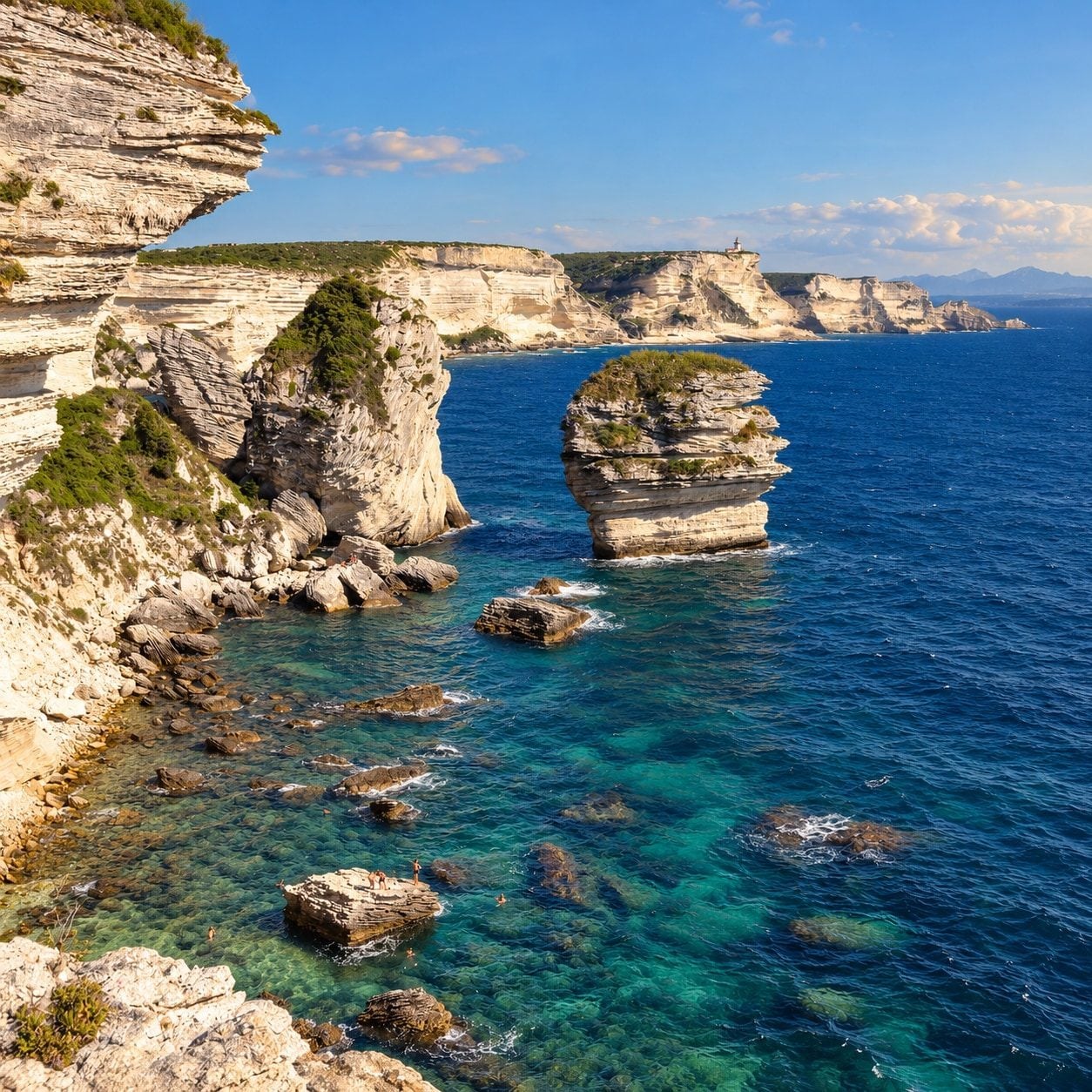
Steep mountains, chestnut-covered hills, granite terrain, limestone cliffs and isolated valleys have shaped a way of building deeply connected to the land. For centuries, people built with what they found nearby: stone, wood, earth and lime.
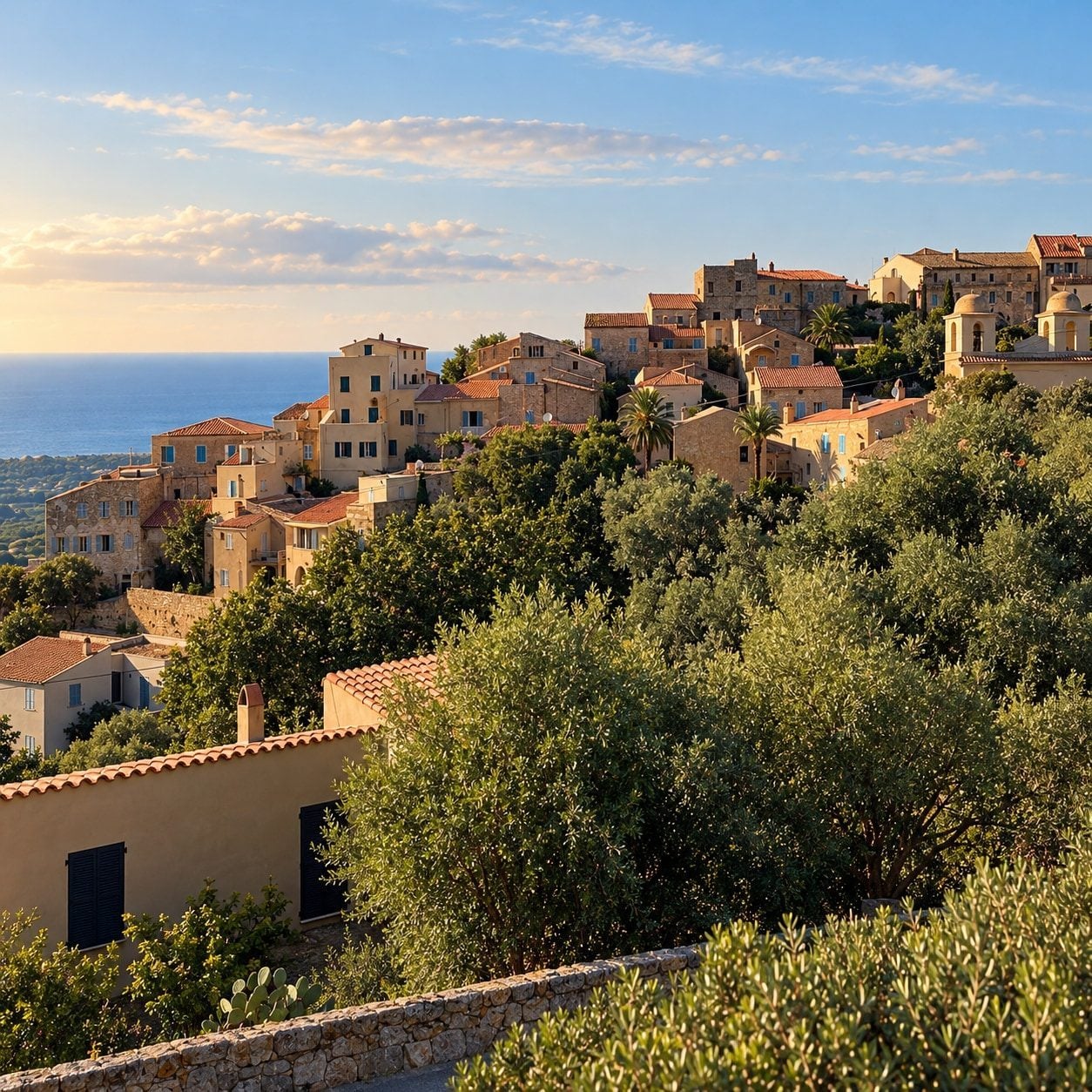
From one region to another, houses take on different shades. In the south and west, granite offers tones of grey, pink and ochre. Elsewhere, schist lends façades darker, almost silvery hues. In the villages of Balagne, lime-rendered walls sometimes wear soft colours, weathered by the seasons. This diversity gives Corsican villages their distinctive character.
Houses are often tall, narrow and clustered close together. Their thick walls protect against summer heat and the rigours of winter. Sometimes modest in size, the openings keep the interiors cool. Stone steps, wooden shutters, and roofs of stone slabs or tiles, depending on the area, form an architecture that is restrained, practical and deeply elegant. Nothing feels superfluous.
It is precisely this simplicity that moves us. The imperfections of an old wall, the unevenness of a stone floor, the patina of a solid wooden door possess a beauty that no industrial material can truly reproduce.
In an age when everything seems expected to be new, perfectly aligned and instantly consumable, these houses invite us to look differently.
They teach us to love what lasts, what ages and what endures through time.
Corsican shepherds’ cottages, the elegance of the essential
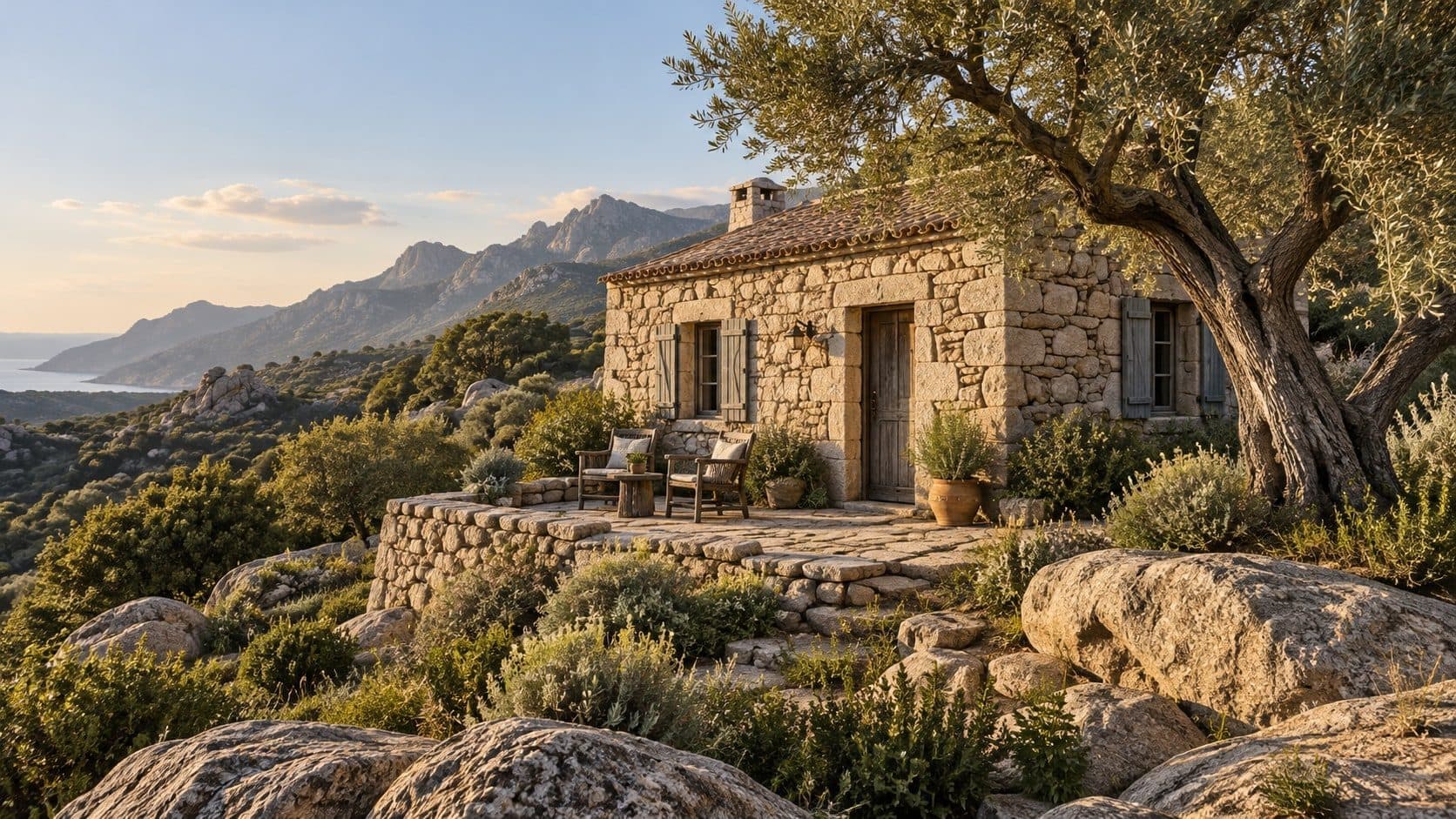
Around a bend in a maquis-lined path, above a village or in the shelter of a valley, small stone buildings sometimes appear, discreet and almost invisible in the landscape.
Corsican shepherds’ cottages are perhaps among the most moving expressions of the island’s architecture.
Once closely tied to pastoral life, they followed the rhythm of the seasons and the movement of the flocks. As the warmer days arrived, shepherds left the plains for the high pastures. Up there, these modest buildings offered shelter, a place to rest and sometimes somewhere to work with milk and store cheese.
Their architecture answered simple needs: sheltering from the wind, keeping cool, withstanding the weather and using the resources available on site. Today, some of these cottages are enjoying a second life.
Restored with care, they become distinctive retreats where traditional architecture meets contemporary comfort. Exposed stone walls sit alongside mineral floors, old beams, natural fabrics and furniture with clean lines.
We picture a large wooden table beneath a pergola, a few rattan armchairs, woven baskets, handmade tableware, crumpled linen sheets and bouquets of everlasting flowers picked in the garden. The interiors need not try too hard. The materials themselves create the atmosphere.
And when evening comes, when the last sunlight brushes the stone and the cicadas fall silent, the magic of these places becomes clear.
To stay in a Corsican shepherd’s cottage is to experience a quiet kind of luxury: the feeling of being somewhere entirely different, yet immediately at home.
Pagliaghji, small buildings that tell a larger story
Even less familiar than shepherds’ cottages, pagliaghji belong to a rural heritage we often discover by chance.
A pagliaghju, plural pagliaghji, traditionally denotes a small agricultural or pastoral building, often made of dry stone. Depending on the region and its use, it could serve to store hay, shelter tools or support the work of shepherds and farmers. These buildings fascinate through their simplicity.
Their walls are made of carefully assembled stones, sometimes without any mortar. Their shape, roof and proportions vary according to the area and local resources. Some blend into rocky contours; others seem to rise from a meadow, beneath an oak or among olive trees.
They bear witness to patient craftsmanship, an intimate understanding of materials and a relationship with the land that feels particularly inspiring today.
As contemporary architecture seeks to reduce its environmental footprint, these buildings remind us that building intelligently often begins with observing what surrounds us.
Using local stone. Working with the topography. Making the most of shade, wind and the thermal mass of walls. Choosing durability over the fleeting. Once dictated by necessity, these principles now feel strikingly modern.
Preserving pagliaghji means far more than keeping picturesque stone silhouettes. It means protecting a rural memory, architectural knowledge and a particular vision of harmony between people and nature.
The Corsican way of life, or the happiness of slowing down
In Corsica, time seems to have a different density.
Days begin gently, often with light filtering through half-open shutters and birdsong in the trees. Coffee is made, windows are opened, and bare feet cross a terrace that is still cool. No one is really watching the clock.
Breakfast lingers around a table of seasonal fruit, fresh bread, preserves and mismatched cups. Children play outside, conversations overlap, and plans for the day remain deliberately vague.
Perhaps we will go to the beach. Perhaps we will choose a mountain river. Or perhaps we will simply stay at home, reading in the shade, cooking together and enjoying the rare pleasure of having nothing planned. This is where the philosophy of slow living finds its full meaning.
Slowing down not to follow a trend, but to rediscover a more human rhythm. Taking time to look, taste and listen. Giving importance to small gestures, shared moments and simple things. In Corsica, this way of living feels almost natural.
Lunches turn into afternoons. Swimming has no fixed end. Evenings stretch beneath the stars over one last glass, while the children fall asleep on the benches. Years later, these are the moments that become our most precious memories.
Between sea and mountains, the beauty of contrasts
There are few places where sea and mountains share such an intimate relationship.
In Corsica, landscapes follow one another with an almost unreal intensity. A day may begin facing turquoise water, before a winding road leads to a hilltop village, through a pine forest or towards a river with crystal-clear pools.
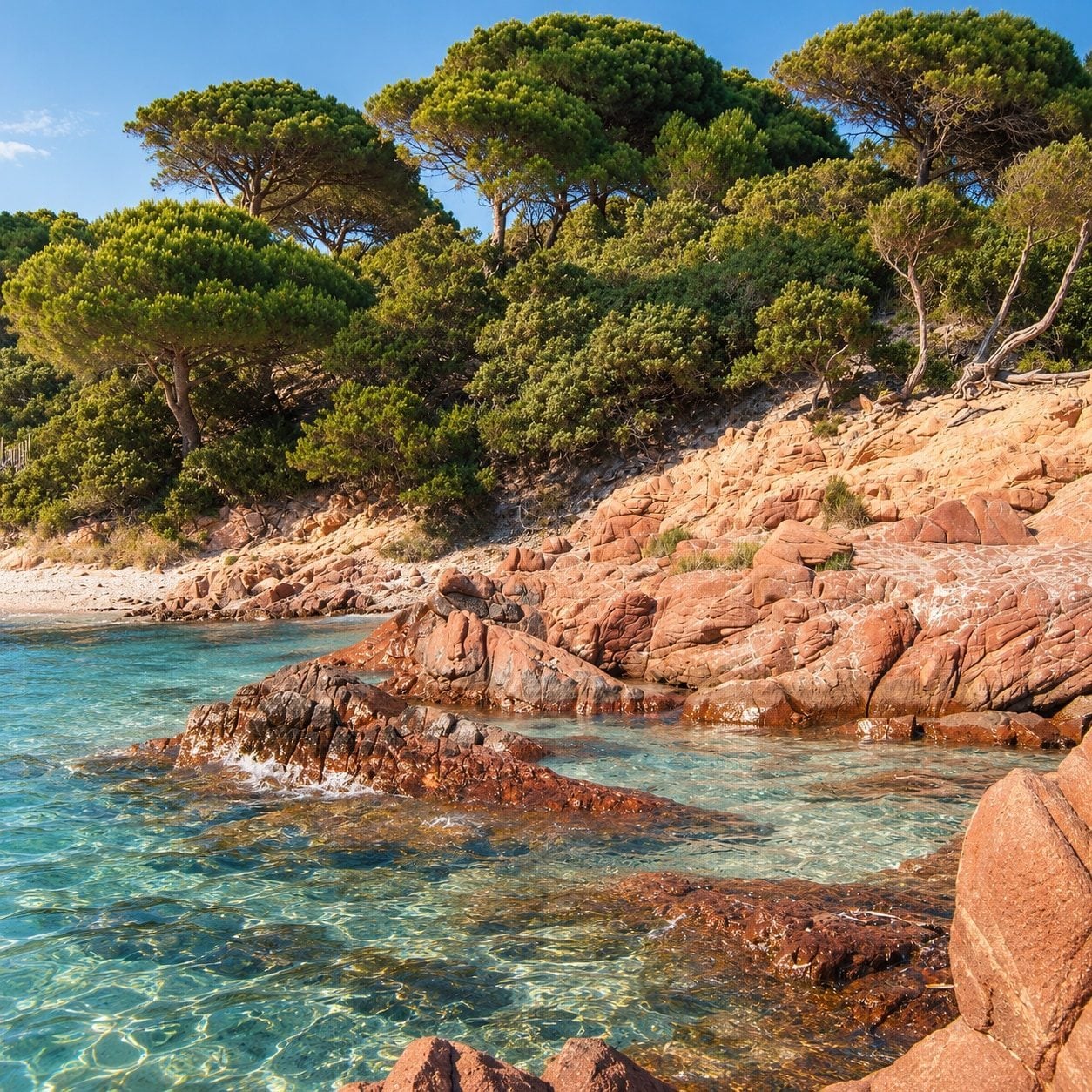
In the south, the beaches of Palombaggia and Santa Giulia reveal transparent water, granite rocks and umbrella pines. Further west, wild coves alternate with cliffs and long stretches of sand.
Inland, the Aiguilles de Bavella form spectacular silhouettes. The mountains of the Niolu tell of a more secluded Corsica, pastoral and deeply attached to its traditions.
In Balagne, stone villages overlook olive groves and the Mediterranean. In Cap Corse, roads follow cliffs, seaside hamlets and small harbours where time seems to stand still. Each region has its own light, colours and scents.
It is this diversity that makes holidays in Corsica so distinctive. We come for more than the sea or sunshine. We come to feel the freedom offered by a nature that remains powerful, sometimes wild and always surprising.
We return from a walk with dusty shoes, salty hair and arms full of small treasures gathered along the way: a smoothly shaped stone, a piece of driftwood, a photograph, a memory.
Holiday houses, refuges for family memories
There is something infinitely precious about holiday houses.
They provide the setting for moments that, almost without our noticing, become the stories we tell later.
Breakfasts still in pyjamas. Beach towels drying over chairs. Card games after dinner. Children running between terrace and garden. Cousins meeting every summer and growing up together. Corsican houses seem particularly suited to holding these memories.
With their thick walls, shaded terraces, generous kitchens and gardens opening onto the landscape, they invite a spontaneous, convivial life that moves easily between indoors and out.
Long tables take precedence over formal entertaining. Natural materials over elaborate decoration. Objects with a history over those designed to impress.
An old bench, a piece of handmade pottery, a linen tablecloth, a wicker basket and a few olive branches in a vase are enough to create an atmosphere. The house becomes a refuge where everyone finds their place.
Perhaps this is the loveliest definition of a family house: somewhere we feel free to be ourselves, where generations come together and memories gently gather.
The beauty of materials, between tradition and modernity
Corsican architecture offers a remarkable source of inspiration for imagining timeless interiors.
Stone naturally takes centre stage. Rough or polished, light or dark, it brings depth, character and authenticity. It sits beautifully alongside raw wood, lime finishes, plant fibres and soft textiles.
The palette seems borrowed directly from the landscape: sandy beige, the warm grey of granite, olive green, the brown of weathered wood and the off-white of sunlit façades.
These natural tones are answered by deeper accents inspired by the maquis, the earth and the sea. What matters is balance.
Keeping the irregularities of an old wall. Letting spaces breathe. Welcoming light without erasing shadow. Choosing lasting, honest objects whose beauty does not depend on fashion.
In a restored shepherd’s cottage, just as in a contemporary house, true refinement often lies in knowing what to preserve.
Successful architecture should be more than beautiful to look at. It should be a pleasure to live in, last through the seasons and leave room for the people who inhabit it.
It is this sensitive and deeply human vision of the home that resonates with the world of Dear KinHome.
The golden hour, when Corsica becomes unforgettable
Then comes that particular moment at the end of the day, when the light begins to fade.
Landscapes change. Stones take on golden reflections, mountains turn pink and the sea becomes silver. The heat eases and a new softness settles in.
It is the hour of returning from the beach, still wrapped in salt and sunshine. Of preparing dinner with the windows open. Of conversations beginning again on the terrace while the sky slowly changes colour. Corsican sunsets have something deeply moving about them.
Perhaps because they remind us that the most beautiful things are often the simplest. Sometimes all it takes is to sit, look towards the horizon and share the silence with the people we love to feel an immense happiness.
Children watch the last light of the day. Someone brings glasses. Another chair is added to the table. We promise to return next year. And already, without knowing it, we are making a memory.
Corsica, a certain idea of happiness
We always leave Corsica with the feeling of leaving something behind.
A little of that rediscovered freedom. The slowness of summer days. The scent of everlasting flowers. The coolness of a stone house. A glimpse of blue sea between the trees. The memory of an endless dinner, a child’s laughter, a sunset we wished we could hold on to. Yet we also take so much with us.
A different way of looking at architecture, thinking about the home and inhabiting the world. A desire for simplicity, honest materials and places with soul.
Shepherds’ cottages, pagliaghji and old villages teach us that beauty need not be spectacular to be profound. That a carefully laid stone, a wall shaped by time or a house open to the landscape can tell us more than a perfectly composed setting.
Corsica is a land of contrasts, character and emotion. An island where sea meets mountains, where architecture extends nature and where family memories take on a distinctive flavour. An island that invites us to slow down and feel more deeply.
And reminds us, summer after summer, that the most beautiful journeys are not only those that take us far away.
They are the ones that bring us closer to what matters.
Dear KinHome — The Journal